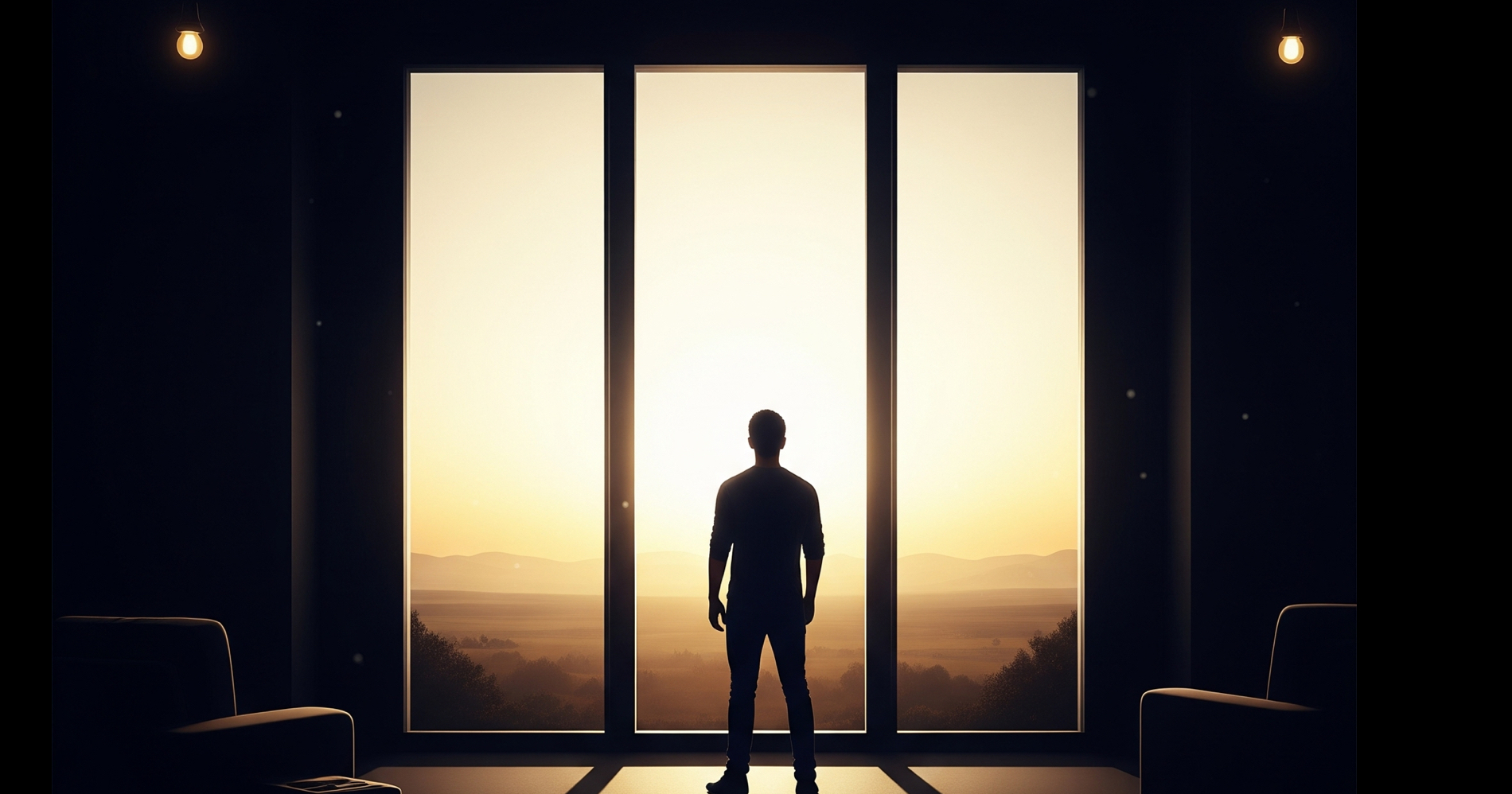
I listened to a TED Talk recently that introduced a startling idea: we are often our own kidnappers. We build ornate, comfortable rooms for ourselves and then, slowly, over time, forget that we are the ones who hold the key. We become willing captives to the very lives we’ve painstakingly constructed.
Looking back, I can see the blueprints for this kind of confinement being drawn up early in my life. My youth was a kind of frantic, shotgun approach to finding myself. I tried everything: baseball, soccer, hockey, swimming, hoops. I picked up a piano, a guitar, a trumpet, a French horn. I was the lead in the high school play, and for a few ill-fated gigs, the lead singer for a band called “Rubber Bullets.” I juggled all this while running a paper route, collecting rent from half-awake adults on Saturday mornings.
I mastered none of it. The constant motion, the relentless trying, was the point. It was a way to outrun a quiet restlessness. In retrospect, perhaps I wasn’t searching for a single passion to land on; I was building a cage out of sheer activity, a place so full of striving there was no room for stillness.
This lifelong habit found its ultimate home in my television career. For 36 years, it was, in many ways, a golden cage. It provided security, a roof over my head, and a meaningful connection to a community I cherish. It gave me a public identity and experiences for which I will always be grateful. From the outside, and even from the inside on most days, it looked and felt like success.
But captivity, even when comfortable, comes at a cost. There is a ransom paid in unseen installments over many years. I have come to realize, with the stark clarity that only hindsight can offer, that I allowed my time to be hijacked by my commitment to the job. That hijacked time, in turn, ‘robbed my kids of their Dad for far too long.’ That is a difficult truth to write, but an essential one to acknowledge.
The kidnappers weren’t external forces; they were my own internal beliefs. They were the fear of ‘playing without a net,’ the conviction that I had to be ‘seen as being successful publicly’ or it would all fall apart, and the quiet, persistent need to make everyone happy so that I, in turn, might feel secure.
So what do you do when you realize you’re a captive in a prison of your own making? First, you have to see the walls. For me, that came during a period of intense stress a couple of years ago, when I finally stopped running long enough to ask, ‘What are you doing? Do you want more of this?’ Answering that question honestly was the beginning of crafting the key.
That key was realizing what I truly love: being involved, listening, educating, and being part of it all.
I am free now, but freedom isn’t an empty field; it’s a new landscape with its own mountains. The old doubts and self-prosecuting voices still whisper. But they are no longer the wardens. The choice of how I spend my time, the ability to be present for a family lunch on a Sunday or a ballgame on a Tuesday—that is the freedom I was seeking. I have taken back my own time.
I know my journey has been unique, but perhaps the question is universal. What are we afraid of? What won’t we let ourselves do? And if we were freed from the narratives that hold us captive, what new life would we step into?
Random Thought for the Week:
I wonder if people from municipal water treatment plants are just beside themselves watching the rest of us pay insane amounts for bottled water when, in most of America, the tap water is incredibly safe and nearly free.
Advice for the Week:
Get a pair of truly great headphones and listen to your favorite album all the way through. If you have anything less than excellent headphones, you have probably not heard your favorite music as the artist and producer intended. Also, consider the lyrics. I just recently truly understood what the song “She’s a Beauty” by The Tubes was about. A little embarrassing, but illuminating!