
I am making another pass around the sun today, though I admittedly do not feel my age. I am fortunate to still have my hair, and people frequently compliment my energy—though at this stage in life, I suspect noting my energy is as much a cautionary observation about my vintage as it is a compliment.
Historically, this is the kind of day that prompts a flurry of social media activity. But like many people, I have quietly retreated from the digital town square. Aside from sharing the occasional project for work—which I genuinely believe in and love doing—my personal feeds have gone largely dormant.
There is a cost to that withdrawal. I miss the mundane, beautiful updates: a friend’s daughter at cheer camp, a family getting ice cream on a Tuesday. But those human moments are increasingly buried under an algorithm with a heavy, virtual finger on the scale, prioritizing geopolitical outrage and manufactured friction. With the exception of uncooked sports opinions, the ecosystem simply no longer serves me.
So, why write this at all? Because while I do not miss the algorithm, I do miss the actual engagement.
For decades, my career as a TV meteorologist provided a massive platform for that connection. It was a nightly high-wire act, a chance to perform and project into thousands of living rooms. I loved the people I worked with, and I never minded the conversations in the grocery store aisles. Being recognized on the Central Coast and talking about the weather was a privilege.
But I do not miss the clock.
The most profound shift in my life has been the restructuring of my time. Today, I am often in bed before 10:00 PM—nearly two hours before my old workday would have even ended. I have reclaimed the early evening. I am home while the sun is still up. I have the time to walk through town, sort my thoughts, and say hello to people I don’t know, engaging with the physical world rather than a camera lens.
That shift in time has brought a necessary humility, particularly in my relationships. My son and daughter are adults now, and our dynamic has fundamentally changed. My job is no longer to stop them from crossing the street in traffic, or to push them over the next immediate hurdle. My job is simply to listen. That street runs both ways; they know me better now, too, and none of that understanding comes from “back in my day” lectures.
Professionally, the new hours came with a new mountain to climb. At Diablo Canyon Power Plant, I am surrounded by a high-performing culture of over a thousand brilliant minds. I am fortunate to be on an exceptional team—working alongside several familiar faces from my broadcasting days—but as I branch out and build new connections across the facility, I find myself deeply inspired by the sheer intelligence of the people I work with. It is a new, rigorous challenge, and I am grateful for it.
Internally, however, the shift is even deeper. I have spent most of my life as a relentless prosecutor of myself. My operating system was built on examining my flaws and aggressively chipping away at them, constantly seeking the next metric of validation.
That prosecution is ending. I am actively retiring the need for external validation. I am learning to look at my life and say, with absolute conviction: I have enough. More titles, more money, more digital likes—none of it moves the needle anymore.
I have never been a person who looks backward by design, but today I find myself looking over my shoulder. I am thinking about my hometown of Fargo, North Dakota, my high school classmates, the early jobs that shaped my career, and the hard-earned lessons of being a father, a brother, a son, a friend, and a colleague.
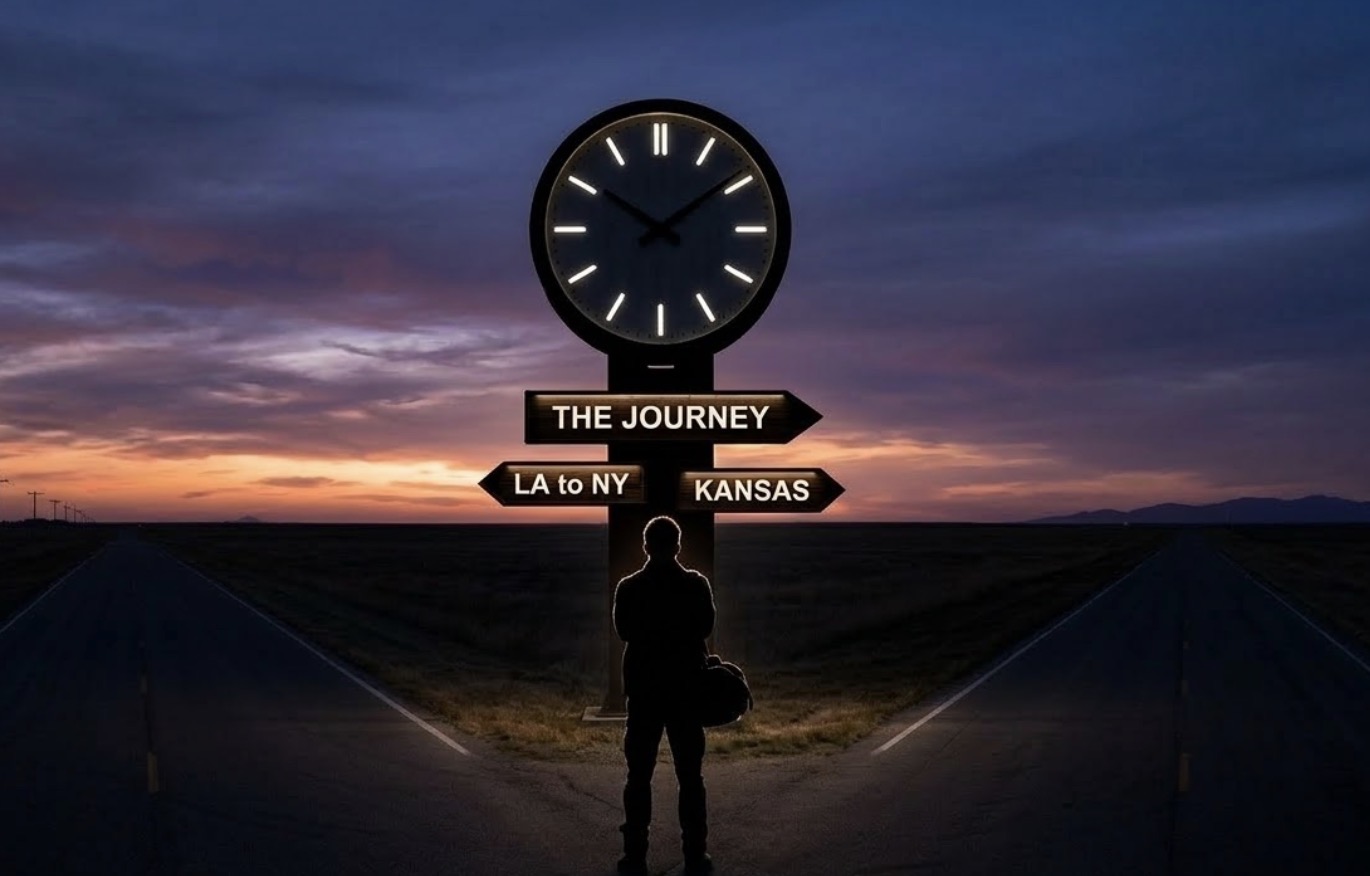
I have been reading a lot lately about the mechanics of human behavior and the concept of free will. It strikes me that life is less like a blank canvas and more like a cross-country drive from Los Angeles to New York. Eventually, you find yourself at a fork in the road somewhere in central Kansas. You feel the weight of the decision, but the reality is that your choice was likely already cooked in by a thousand preceding events. You choose the left fork because of how you were raised, the people you met, the specific failures you absorbed, and the exact environment you inhabit in that moment.
Whether this current mile marker was reached by profound, autonomous choice or by sheer, deterministic chance, I consider myself incredibly fortunate. I am looking forward to the next phase of this journey of discovery. To everyone who has shared this road—not merely as circumstances of chance, but as the people who made the miles matter: thank you.